In brief
- The class under EN ISO 20471 depends on the area of fluorescent background material and reflective strips.
- Class 3 offers the highest visibility, class 1 the lowest.
- Which class is needed follows from the risk assessment – traffic, speed, light and weather.
- A logo must not shrink the visible area so much that the class is lost.
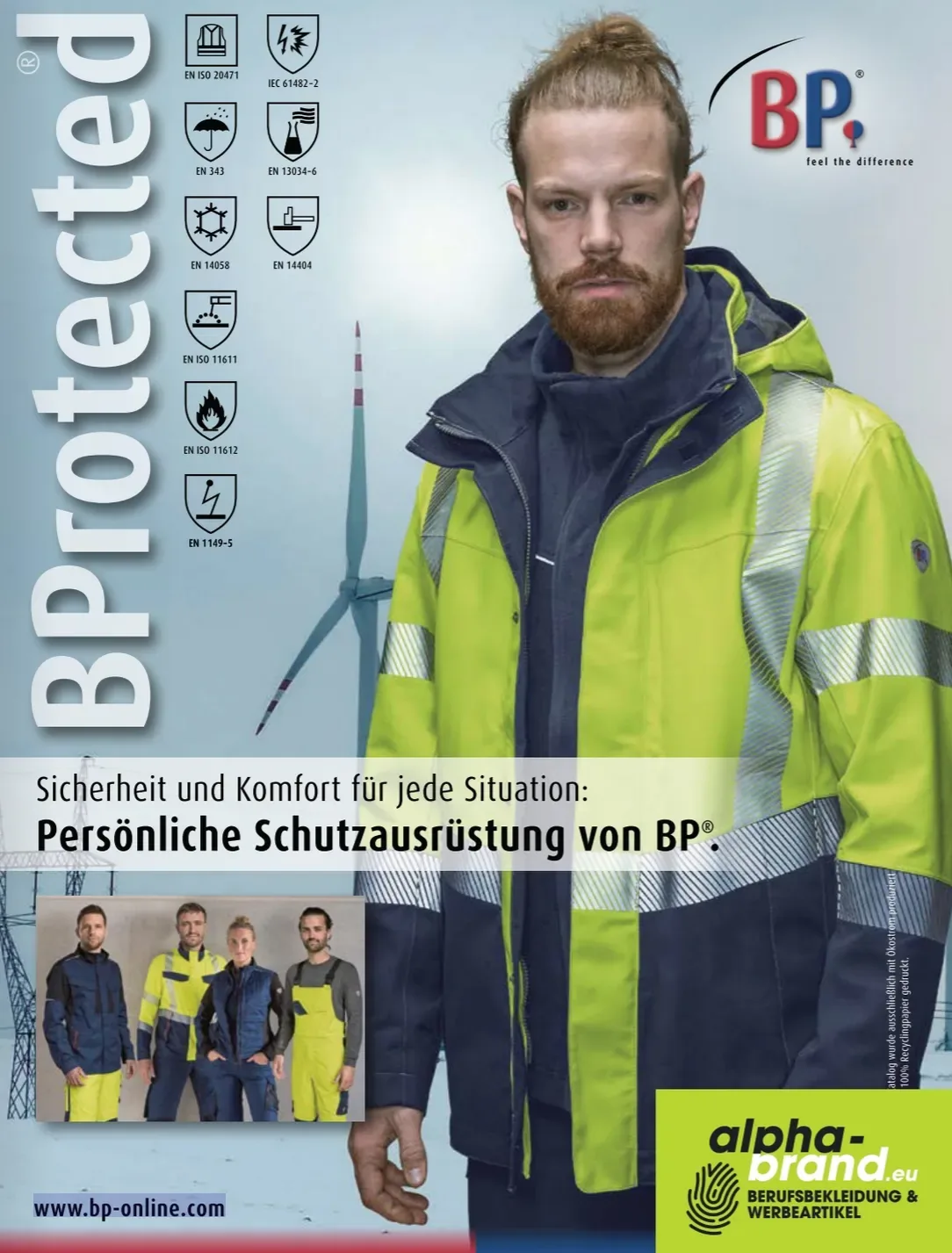
Anyone working near roads, on building sites, in warehouses or in the dark must be seen. High-vis clothing to EN ISO 20471 makes sure of that – in three classes. Here you’ll learn what sets the classes apart, which class suits which job and what to consider for your logo.
The three classes under EN ISO 20471
The class depends on the minimum area of fluorescent background material (daytime visibility) and retroreflective material (visibility in the dark under headlights):
- Class 1at least 0.14 m² background and 0.10 m² retroreflective material – lowest visibility
- Class 2at least 0.50 m² background and 0.13 m² retroreflective material – medium visibility
- Class 3at least 0.80 m² background and 0.20 m² retroreflective material – highest visibility, all round the body
The smallest size always decides: a jacket may reach class 3 in size XL but only class 2 in size S. The class is on the label.
Which class for which job?
Which class is needed follows from your business’s risk assessment. As a rough guide from practice:
- Class 1 – low risk and slow traffic, e.g. on company premises, car parks or in warehouses
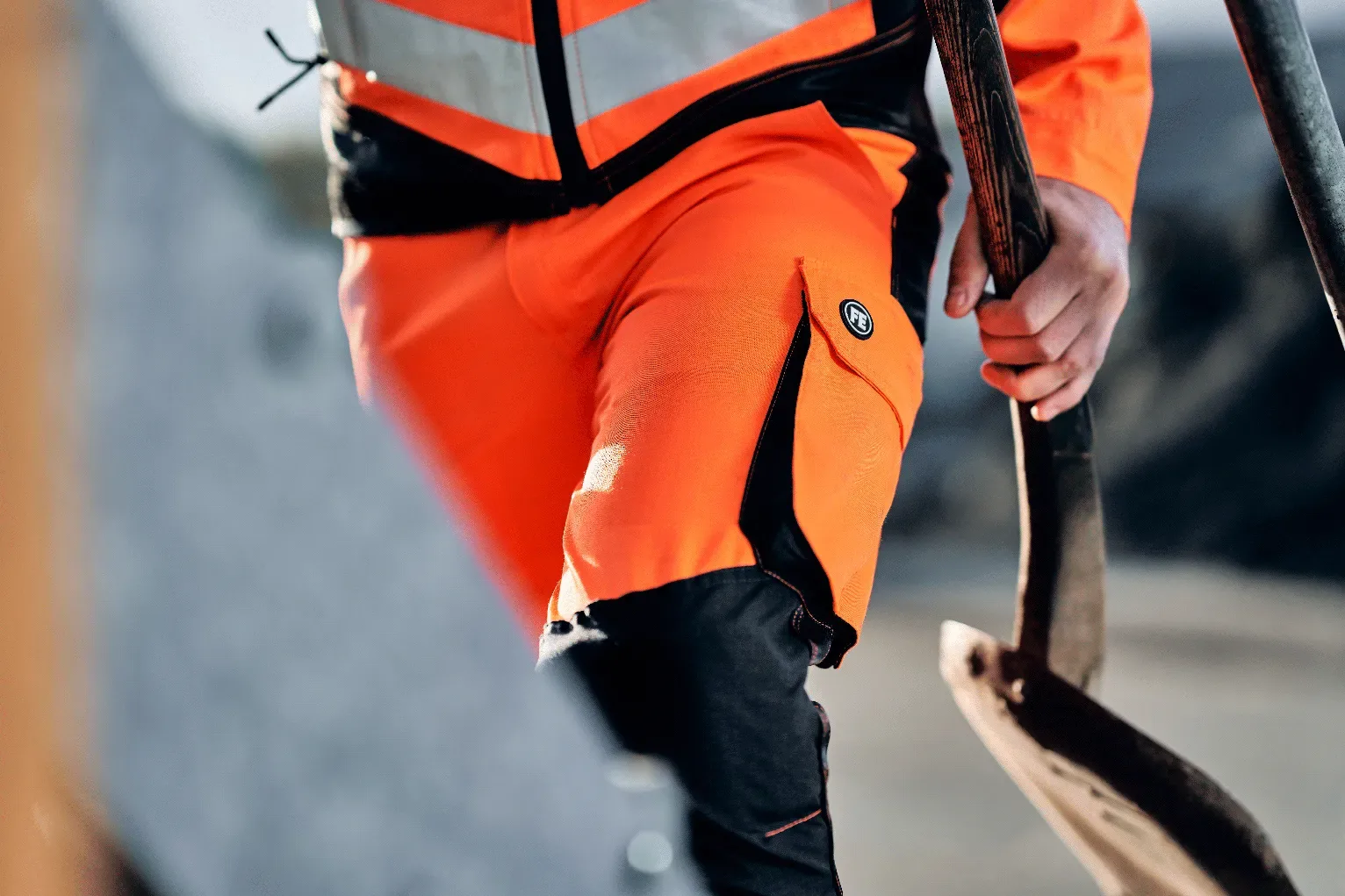
- Class 2 – work near roads and traffic, delivery services, municipal services, outdoor logistics
- Class 3 – high risk: work on busy roads, at night, in fog or snow, road construction and breakdown services
Rule of thumb
The faster the traffic and the poorer the visibility, the higher the class. If in doubt, go one class higher.
Combining jacket and trousers
Many high-vis garments are certified to reach a higher class together – for example a class 2 jacket and trousers that together make class 3. That saves weight in summer and gives full protection in winter. Which combination is certified is stated on the label.
Logo on high-vis clothing: what works
A logo on high-vis clothing is possible – but it must not reduce the fluorescent area below the class minimum. That is why we plan size, position and method together with you:
- small logos on the chest or sleeve instead of large back designs
- print or embroidery only in areas that allow it
- on request a back panel or name strip instead of printing on the visible area
Care and replacement
High-vis clothing loses effectiveness through dirt, sun and washing. The label states how often it may be washed. Once that number is reached or the garment is faded, dirty or damaged, it should be replaced.